
How Often Should North Texas Homeowners Replace HVAC Air Filters During Fall Allergy Season?
North Texas homeowners should check HVAC air filters every month during fall allergy season and typically replace them every 30 to 90 days, depending on the filter, household conditions, and HVAC use. If the filter looks dirty, airflow decreases, or your household has pets or allergy concerns, replacing it closer to every 30 to 60 days may help maintain airflow and effective filtration.
Fall in North Texas can bring welcome relief from peak summer heat, but it can also mean changing indoor air quality concerns. Crow’s Heat & Air has served homeowners and businesses since 1992, providing HVAC repair, preventative maintenance, installation, and indoor air quality expertise throughout Collin County and surrounding North Texas communities. We know that something as simple as an HVAC filter can affect both the air circulating through your home and the performance of your heating and cooling equipment. Knowing when to inspect and replace your filter can help you keep your system running efficiently while managing the dust, pollen, pet dander, and other airborne particles that can find their way indoors.
HVAC Filter Replacement During North Texas Fall Allergies
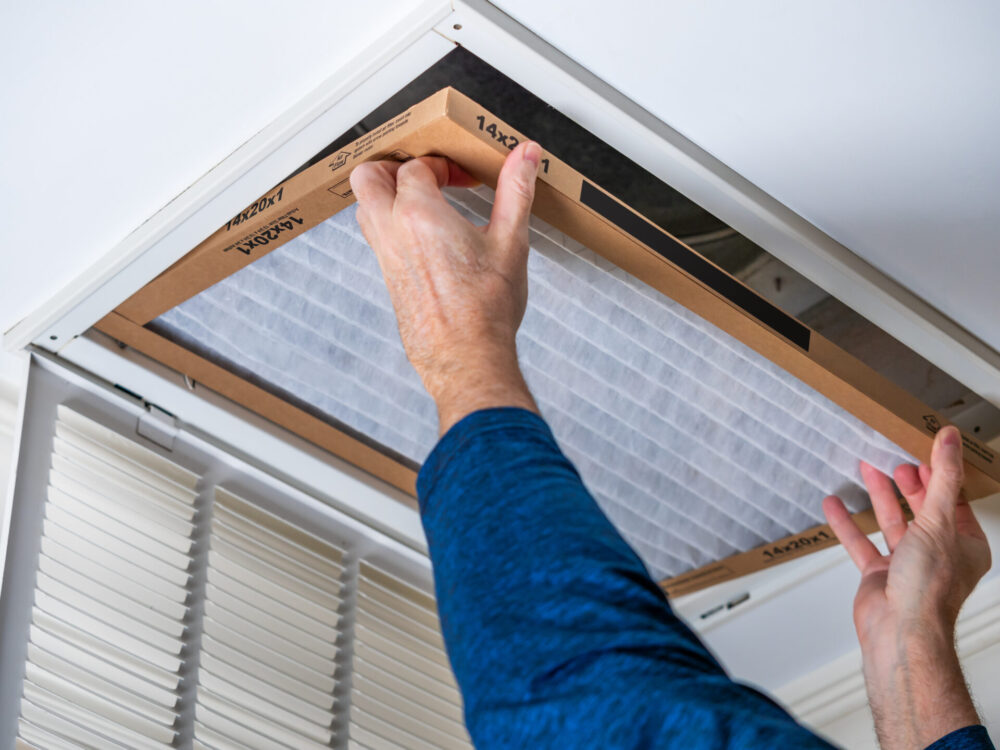
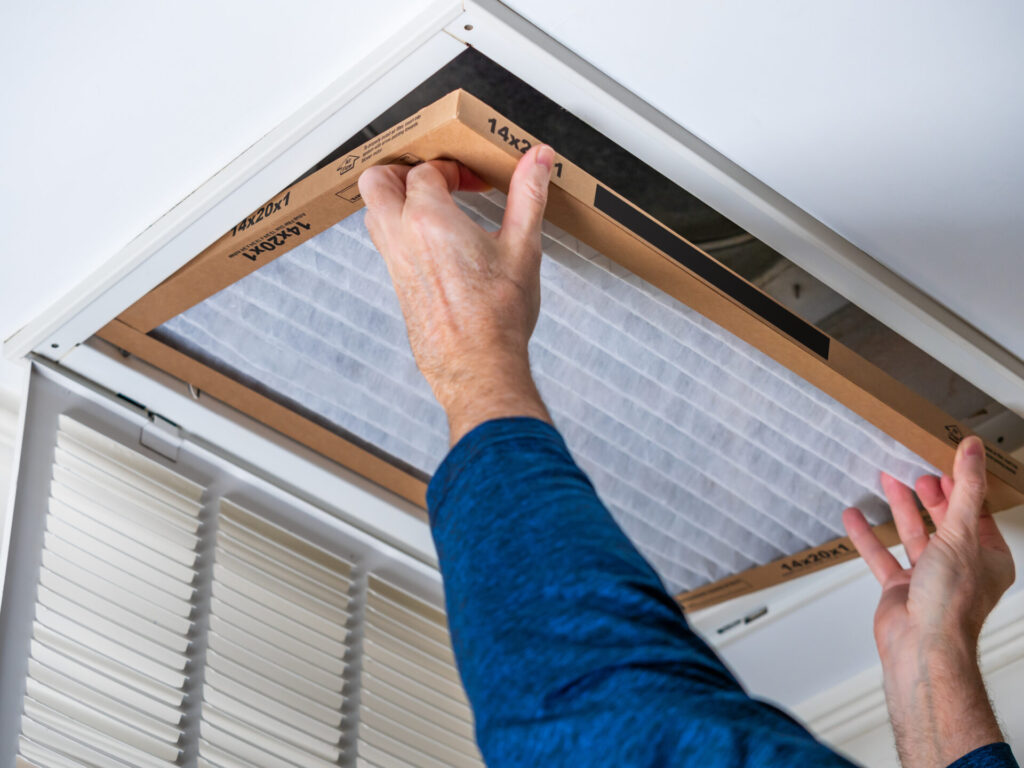
Fall allergy season is a good time to pay closer attention to your HVAC filter. While there is no universal replacement schedule for every home, monthly inspections make it easier to determine how quickly your particular filter becomes dirty.
Should I Change My HVAC Filter More Often During Allergy Season?
Yes, more frequent filter checks can be helpful during periods when pollen and other airborne particles are elevated, especially if someone in your household is sensitive to allergens.
According to the U.S. Environmental Protection Agency (EPA), indoor air can contain particles including pollen, mold, fine particulate matter, and other contaminants. HVAC filtration can help reduce indoor air pollution, although filtration alone cannot remove every pollutant from your home’s air.
ENERGY STAR recommends checking HVAC filters every month, particularly during periods of heavy system use. If the filter looks dirty after one month, it should be changed. At a minimum, ENERGY STAR recommends replacing the filter every three months.
For North Texas homeowners, a practical fall routine is:
- Check the HVAC filter every 30 days.
- Replace it immediately if it is visibly dirty or clogged.
- Follow the filter manufacturer’s replacement instructions.
- Check more frequently if you have pets, significant household dust, or allergy concerns.
- Do not automatically wait 90 days if the filter becomes dirty sooner.
Your filter’s actual condition is more important than simply following the calendar.
What Does an HVAC Filter Do for Fall Allergies?
An HVAC filter captures some of the airborne particles passing through your home’s forced-air heating and cooling system, which can include pollen and other particles associated with indoor air quality.
The EPA explains that HVAC filters work only when air is moving through the system. A filter’s ability to capture different particle sizes is commonly measured using its Minimum Efficiency Reporting Value, better known as its MERV rating.
Higher MERV ratings generally indicate greater efficiency at capturing specific particle sizes. The EPA recommends using a filter rated at least MERV 13, or the highest efficiency filter your HVAC system’s fan and filter slot can accommodate.
However, homeowners should not simply buy the filter with the highest number on the shelf.
A filter needs to be compatible with your HVAC system. Installing a filter that creates excessive airflow resistance can affect system performance. The EPA recommends consulting an HVAC professional when you are unsure about the highest-efficiency filter your system can accommodate.
How Do I Know My Air Filter Needs to Be Replaced?
Replace your HVAC filter when it is visibly dirty or when you notice signs that airflow through the system may be restricted, even if the filter has not reached its suggested replacement date.
Common reasons to inspect your filter include:
- Visible dust and debris covering the filter
- Reduced airflow from supply vents
- Longer heating or cooling cycles
- More dust accumulating around the home
- A filter that becomes dirty much faster than usual
- Increased HVAC use
- Recent home improvement or remodeling work
A dirty filter is more than an indoor air quality concern. ENERGY STAR warns that dirty filters slow airflow and make HVAC systems work harder to keep a home comfortable. Dirt buildup can also contribute to maintenance problems and premature system failure.
That makes regular filter replacement one of the simplest HVAC maintenance tasks homeowners can perform.
Is a Higher MERV Rating Always Better for My HVAC System?
A higher MERV rating can capture smaller particles more efficiently, but the best filter is the highest-efficiency option your specific HVAC system can properly accommodate.
The EPA reports that MERV ratings measure a filter’s ability to capture particles between 0.3 and 10 microns. For example, a MERV 13 filter must demonstrate substantially better capture efficiency for smaller particles than lower-rated filters.
The EPA recommends MERV 13, or as high a rating as your system can accommodate. It also notes that a professional HVAC technician can help determine which high-efficiency filters are appropriate for a particular system.
Filter fit matters too. The EPA recommends choosing a filter that fits snugly in the filter slot so air does not bypass the filter around its edges.
Before upgrading your filter:
- Check your HVAC manufacturer’s recommendations.
- Confirm the correct filter dimensions and thickness.
- Make sure the filter fits securely.
- Ask an HVAC technician whether your system can accommodate a higher MERV rating.
- Continue inspecting the new filter regularly after installation.
Better filtration works best when it is paired with proper airflow.
Why Does Fall HVAC Maintenance Matter in North Texas?
Fall is an ideal time to inspect both your HVAC filter and the rest of the system because your equipment is transitioning from heavy summer cooling toward colder-weather operation.
North Texas homeowners know how demanding summer can be on an air conditioner. By fall, the system may have accumulated months of dust and debris while operating through extended periods of hot weather.
A fall HVAC check provides an opportunity to address dirty filters, airflow concerns, thermostat operation, and other maintenance issues before heating becomes a priority.
Crow’s Heat & Air serves Collin County and surrounding North Texas communities, including Allen, Anna, Celina, Frisco, Lewisville, McKinney, Plano, Princeton, Prosper, Sherman, and other nearby areas. Preventative maintenance can help homeowners prepare their equipment for changing seasonal demands while identifying small problems before they turn into larger repairs.
Frequently Asked Questions About HVAC Filters and Fall Allergies
Is changing an HVAC filter every 30 days too often?
Not if the filter is visibly dirty after 30 days or your filter manufacturer recommends that interval. ENERGY STAR recommends checking filters monthly and replacing them whenever they become dirty, with replacement at least every three months.
What MERV rating is best for allergies?
The EPA recommends using at least a MERV 13 filter, or the highest-rated filter your HVAC system can accommodate. Because equipment varies, ask an HVAC professional before significantly increasing filter efficiency.
Can a dirty air filter make my HVAC system work harder?
Yes. ENERGY STAR says a dirty filter restricts airflow and makes the heating and cooling system work harder to maintain comfort, which can waste energy and contribute to equipment problems.
Can an HVAC filter completely remove allergens from my home?
No. HVAC filtration can help reduce airborne particles, but the EPA emphasizes that filters cannot remove all indoor air pollutants. Filtration works best as part of a broader indoor air quality strategy that also addresses pollutant sources and appropriate ventilation.
Keep Your North Texas HVAC System Breathing Easier This Fall
Checking your air filter once a month takes only a few minutes, but it can make an important difference for HVAC airflow, efficiency, and indoor air quality. During North Texas fall allergy season, do not rely solely on a predetermined replacement date. Inspect the filter regularly and replace it whenever it becomes dirty.
If you are unsure which filter or MERV rating is appropriate for your system, or your home still feels dusty or uncomfortable despite regular filter changes, Crow’s Heat & Air can help evaluate your HVAC system and indoor air quality needs.
Ready to prepare your HVAC system for fall? Contact Crow’s Heat & Air to schedule professional HVAC maintenance and get help choosing the right filtration solution for your North Texas home.