

How Can a Heat Pump Keep Your North Texas Home Warm When Temperatures Drop Below Freezing?
A heat pump can keep a North Texas home warm when temperatures fall below freezing by extracting heat from outdoor air and transferring it indoors. Modern cold-climate heat pumps can operate efficiently at temperatures well below 32°F. Depending on the system and your home’s heating needs, supplemental electric heat or a backup furnace may provide additional warmth during extreme cold.
North Texas homeowners experience a wide range of temperatures throughout the year, from scorching summer afternoons to sudden winter freezes. While heat pumps are widely recognized for their cooling capabilities, many homeowners are surprised to learn that these systems can also provide reliable heating during cold weather.
At Crow’s Heat & Air, we understand that choosing the right heating system means balancing comfort, efficiency, and dependable performance. Since 1992, our family-owned company has served residential and commercial customers throughout Collin County and surrounding communities.
Whether you already own a heat pump or are considering installing one, understanding how the technology performs in freezing temperatures can help you make informed decisions about your home’s heating needs.
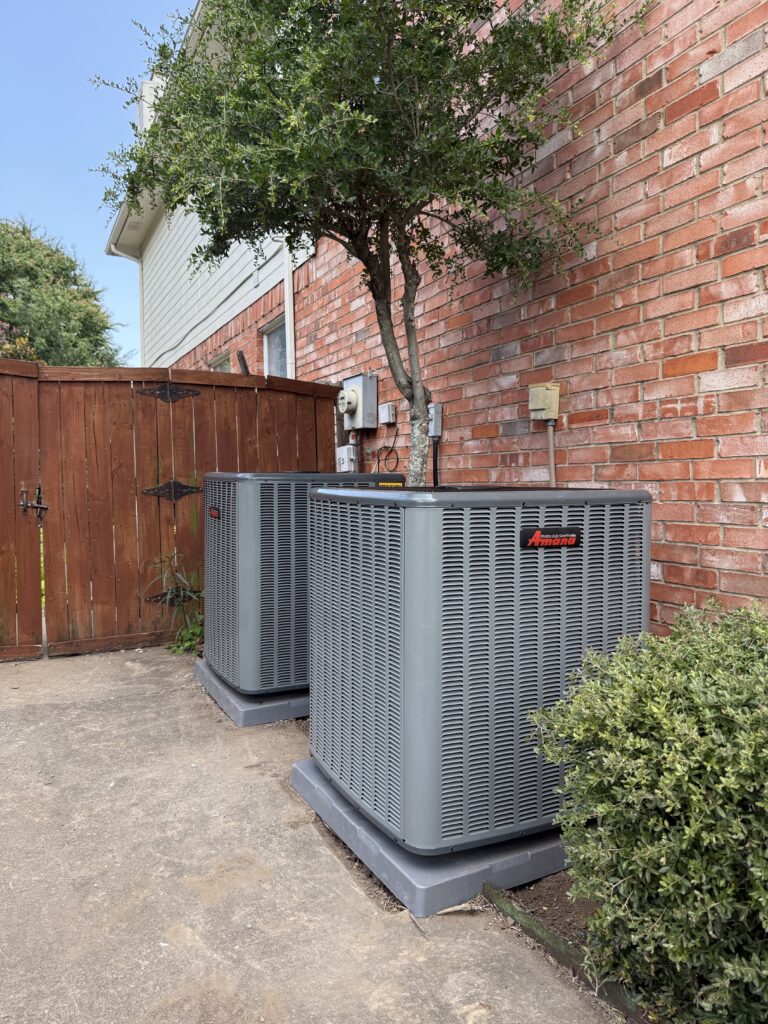
Cold-Weather Heat Pump Performance: What North Texas Homeowners Should Know
Heat pumps operate differently from traditional furnaces. Instead of generating heat by burning fuel, an air-source heat pump transfers existing heat from one location to another.
Even when outdoor temperatures drop below freezing, the air still contains thermal energy that a properly designed heat pump can capture.
1. How Does a Heat Pump Produce Warm Air When It Is Freezing Outside?
A heat pump can warm your home in freezing weather because it uses refrigerant and a compressor to absorb and transfer heat from outdoor air.
Although 32°F feels cold, it is still far above absolute zero, meaning thermal energy remains available.
The heating process generally follows these steps:
- Heat absorption: Refrigerant circulating through the outdoor coil absorbs heat from the surrounding air.
- Compression: The compressor increases the refrigerant’s pressure and temperature.
- Indoor heating: The heated refrigerant travels to the indoor coil, where it releases warmth into your home’s air.
- Heat distribution: The indoor blower circulates conditioned air through the ductwork.
- Continuous operation: The refrigerant cycle repeats as needed to maintain the thermostat setting.
This process allows a heat pump to provide heating without relying entirely on electric resistance elements.
According to the U.S. Department of Energy, modern heat pump technology has improved significantly, making appropriately selected systems suitable for a wider range of cold-weather conditions.
For homeowners in McKinney, Princeton, Allen, and surrounding North Texas communities, this technology can offer both heating and cooling from a single system.
2. How Cold Is Too Cold for a Residential Heat Pump?
There is no single outdoor temperature at which every residential heat pump stops working. Performance depends on the equipment’s design, heating capacity, installation, and the home’s heating requirements.
Older or conventional heat pumps may experience significant reductions in heating capacity as temperatures fall. Newer cold-climate models are designed to maintain stronger heating performance at lower temperatures.
ENERGY STAR’s cold-climate heat pump criteria provide a useful benchmark:
- Cold-climate models must demonstrate specified heating performance at 5°F.
- Qualifying systems must retain at least 70% of their rated 47°F heating capacity at 5°F.
- They must achieve a coefficient of performance of at least 1.75 at 5°F.
- Proper equipment sizing and backup heating design remain important for maintaining indoor comfort.
The coefficient of performance, or COP, measures how much heating energy a system delivers relative to the energy it consumes.
A COP of 1.75 means the heat pump delivers 1.75 units of heat for every unit of electricity consumed under the specified test conditions.
These performance standards demonstrate why modern cold-climate heat pumps can be effective even during significant winter temperature drops.
However, homeowners should remember that equipment ratings do not guarantee a particular indoor temperature in every house. Insulation, air leakage, ductwork, and system sizing all influence heating performance.
3. What Happens When a Heat Pump Needs Backup Heating?
Backup heating helps maintain indoor comfort when the heat pump alone cannot meet the home’s heating demand.
Many residential heat pump systems include supplemental heating equipment that operates automatically under certain conditions.
Two common configurations are:
Electric auxiliary heating
Some heat pumps use electric resistance heating elements inside the air handler.
These elements may activate when:
- Outdoor temperatures become particularly low.
- The heat pump cannot maintain the requested indoor temperature.
- The thermostat requests a significant temperature increase.
- The system temporarily enters a defrost cycle.
Electric resistance heating can provide additional warmth, but it generally consumes more electricity per unit of heat delivered than an efficiently operating heat pump.
Dual-fuel heating systems
A dual-fuel system combines an electric heat pump with a gas furnace.
During milder conditions, the heat pump typically provides heating. When outdoor temperatures reach a designated changeover point, the furnace can take over.
The U.S. Department of Energy identifies dual-fuel systems as an option for combining heat pump efficiency with the heating capabilities of a conventional furnace.
For North Texas homeowners considering a new HVAC system, the most appropriate backup heating arrangement depends on equipment compatibility, utility costs, and household heating requirements.
4. Why Does My Heat Pump Enter Defrost Mode During Freezing Weather?
Defrost mode is a normal heat pump function that removes frost from the outdoor coil so the system can continue transferring heat effectively.
During cold, humid conditions, moisture in the air may freeze on the outdoor coil. As frost accumulates, it can restrict airflow and reduce heating performance.
To address this, the heat pump temporarily reverses its refrigerant cycle to warm the outdoor coil and melt the frost.
During a normal defrost cycle, homeowners may notice:
- The outdoor fan temporarily stops.
- Steam rises from the outdoor unit as frost melts.
- The system makes a brief change in operating sound.
- Supplemental heating activates to help maintain indoor comfort.
- The outdoor unit returns to normal heating operation after defrosting.
According to guidance published through the U.S. Department of Energy’s Building Science Education Solution Center, defrost cycles commonly last approximately 5 to 15 minutes, depending on equipment and operating conditions.
A brief defrost cycle is generally not a cause for concern.
However, a heat pump that remains covered in thick ice, repeatedly fails to complete defrost cycles, or stops providing adequate heating may need professional inspection.
Never attempt to chip ice from the outdoor coil or pour boiling water onto the equipment. These actions can damage sensitive components.
5. How Can Homeowners Improve Heat Pump Efficiency During a North Texas Freeze?
Proper maintenance, thermostat settings, and adequate airflow can help a heat pump perform more effectively during freezing weather.
North Texas winters can bring dramatic temperature changes within a short period. Preparing your equipment before a cold front arrives can reduce the likelihood of avoidable heating problems.
Consider these practical steps:
- Maintain a consistent thermostat setting. Large temperature increases may activate auxiliary heat unnecessarily on some systems.
- Inspect air filters regularly. Dirty filters can restrict airflow and reduce system performance.
- Keep the outdoor unit clear. Remove leaves, debris, and other obstructions that interfere with airflow.
- Avoid covering the heat pump. Outdoor units need unrestricted airflow to operate properly.
- Check indoor vents. Keep supply registers and return air grilles unobstructed.
- Schedule professional maintenance. A technician can inspect refrigerant operation, electrical components, airflow, and system controls.
Professional maintenance is particularly valuable before the coldest part of winter.
During a heating inspection, an HVAC technician can evaluate whether the heat pump and its supplemental heating components are operating as intended.
Homeowners should also pay attention to unusual increases in energy consumption, persistent heating problems, or unfamiliar system noises.
These symptoms do not automatically mean the heat pump needs replacement, but they may indicate that maintenance or repair is necessary.
Frequently Asked Questions About Heat Pumps in Freezing Weather
Will a heat pump work when it is 20 degrees outside?
Yes. Many residential heat pumps can operate at 20°F, although their heating capacity and efficiency vary by model. Some systems may require supplemental heating to maintain the desired indoor temperature.
Is it normal for auxiliary heat to turn on during a freeze?
Yes. Auxiliary heat may activate when the heat pump needs additional heating capacity or enters defrost mode. Frequent or continuous auxiliary heat operation may warrant an inspection, especially if energy consumption rises unexpectedly.
Should I switch my heat pump to emergency heat when temperatures drop below freezing?
Usually not. Emergency heat is generally intended for situations when the heat pump cannot operate properly. Leave the thermostat in its normal heating mode unless the manufacturer or an HVAC professional recommends otherwise.
Are heat pumps a good choice for North Texas homes?
Heat pumps can be an effective choice for North Texas because they provide both heating and cooling. The best system depends on your home’s size, insulation, existing HVAC equipment, and cold-weather heating requirements.
Stay Warm This Winter With Crow’s Heat & Air
Freezing temperatures do not automatically mean your heat pump will stop heating your home. With properly selected equipment, suitable backup heating, and routine maintenance, a heat pump can provide dependable comfort through North Texas winters.
Crow’s Heat & Air helps homeowners throughout Collin County and surrounding communities with heat pump installation, repair, and maintenance.
Whether you are experiencing heating problems or considering a more efficient comfort system, our team can help you understand your options.
Wondering if your heat pump is ready for the next North Texas cold front? Contact Crow’s Heat & Air today to schedule professional heat pump service and keep your home comfortable throughout the winter.